
Soccer Rankings
USA Sport StatisticsSports
4.734.00 Reviews
- Version
- 5.1.1
- Installs
- 10.00K
- Age Rating
- Everyone
Screenshots
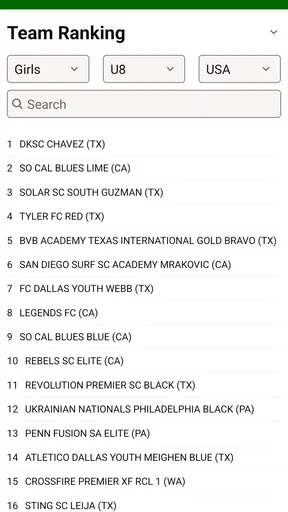
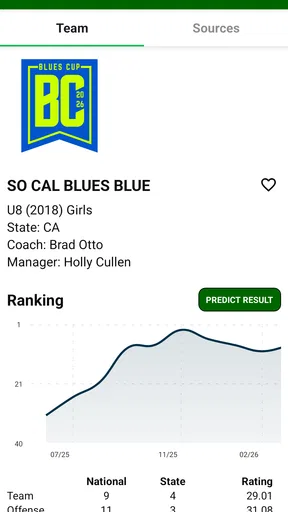
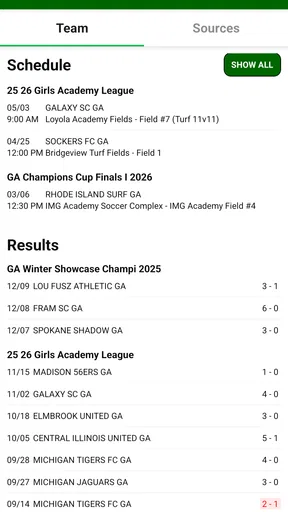
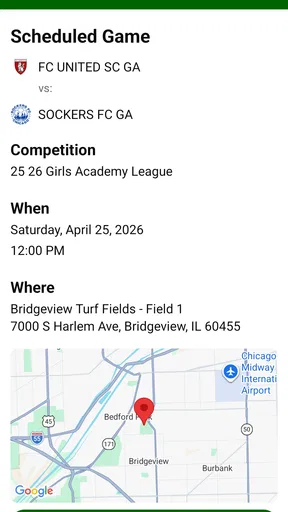
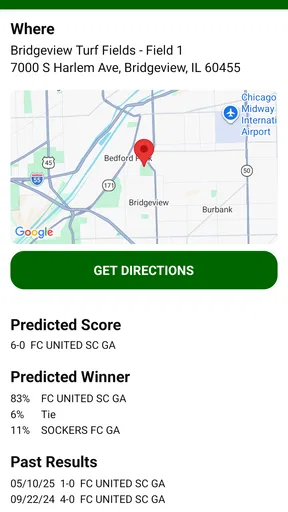
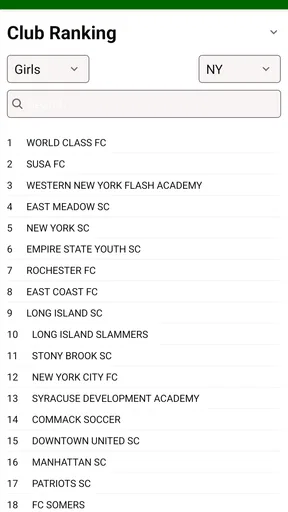
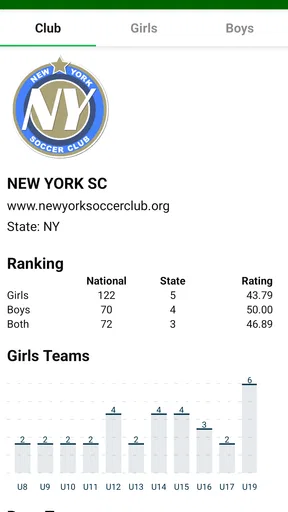
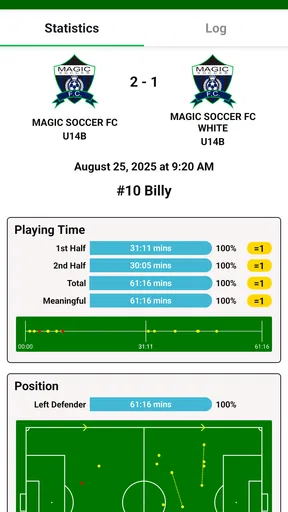
Our Review of Soccer Rankings
 Analysis by Appyee
I spend a lot of time looking for youth-sports tools that are useful outside the field, and Soccer Rankings caught my attention because it focuses on one specific job: helping people follow rankings for USA youth soccer teams. That narrow purpose is also its main strength. It is not trying to be a complete team-management suite, a match-streaming service, or a training planner. I see it as a lightweight reference app for parents, players, coaches, and anyone who wants a quick way to check where a youth team stands.
After using it, my overall impression is positive but measured. The app feels most valuable when I need a ranking reference rather than a full explanation of a team’s season. The interface is easier to appreciate when I approach it with that expectation. It can support a conversation about tournament placement, help a family compare teams before traveling, or give a coach a quick starting point for understanding the competitive landscape. It is less suitable for someone who wants detailed match reports, player statistics, schedules, or a complete club-management workflow.
How Soccer Rankings feels in everyday use
I find the best way to judge Soccer Rankings is to notice when it helps—and when I still need another source. A quick ranking check can give a family or coach a shared starting point, but it should not stand in for the context behind a team’s results. That distinction matters especially on busy soccer days, when a useful reference can easily be mistaken for a complete answer.
A focused starting point for youth soccer information
The first thing I noticed is how clearly the app’s purpose shapes the experience. Soccer Rankings, published by USA Sport Statistics, belongs in the sports category, but it is more specialized than many general sports apps. Instead of asking me to follow professional leagues or browse a wide range of sports, it centers on USA youth soccer rankings.
That focus makes it easier to decide whether the app belongs on your phone. If your child plays youth soccer, or if you coach and regularly compare teams, the subject matter is immediately relevant. If you are mainly interested in professional soccer, international competitions, live scores, or fantasy contests, this is probably not the right download. The app does not need to compete with those services because it serves a different audience.
I also like that the concept is practical for people who do not want to build their own spreadsheet. Youth soccer information can be scattered across club pages, tournament pages, social posts, and conversations between parents. A ranking-focused app gives those comparisons a more convenient home. The useful habit is to treat it as a reference point: check a team, note the context, and then combine that view with what you know about recent opponents and tournaments.
What the app is good at showing you
The strongest use case is quick comparison. Before a weekend event, I can imagine a parent checking several teams to get a broad sense of the field. A coach might use the same process when preparing for an unfamiliar opponent. A player’s family could also use it when discussing whether a result against a highly placed team was more significant than it first appeared.
That does not mean a ranking should replace judgment. Youth soccer is affected by age groups, roster changes, injuries, tournament formats, and differences in the number of matches played. A ranking can organize information, but it cannot explain every result. I would use the app to generate better questions, not to make a final decision by itself.
One practical workflow is to check the ranking before a tournament, save the names or positions that matter to your discussion, and then revisit the same teams afterward. That turns a single glance into a simple way to follow how your understanding changes over time. It is a more useful approach than opening the app only when someone wants to argue about which team is strongest.
Speed expectations and the feel of navigation
For a ranking reference, speed matters because people usually open the app with a specific question. I found the focused design easier to approach than a broad sports platform filled with unrelated sections. There is less conceptual clutter: I am looking for youth soccer ranking information, not trying to navigate through news, videos, betting markets, or multiple leagues.
The app is best judged by how quickly it gets me to a useful comparison rather than by how many visual effects it offers. A simple presentation is appropriate here. When I am standing beside a field or talking with another parent, I want a direct path to the information, not a long setup process. The lighter the interaction feels, the more likely I am to use it during a busy tournament day.
My advice is to open it before you need it. That sounds obvious, but it is especially useful for a focused utility. If you are about to discuss a team with a coach or another parent, checking the relevant age group and teams in advance gives you time to understand what you are seeing. The app works better as a preparation tool than as something you hurriedly explore in the middle of a conversation.
There is also a trade-off in this kind of speed. A ranking app can feel fast because it avoids unnecessary material, but that same narrowness means it may not answer the next question that comes to mind. You might check a position and then want a schedule, a match result, or player-level detail. At that point, you may need another source. I would not call that a failure, but it is an important boundary.
Heavy-use moments: tournaments, tryouts, and family decisions
The most demanding real-world situation is likely a tournament weekend. Parents may open the app repeatedly while comparing opponents, discussing brackets, or checking whether a result changes their view of the competition. Coaches may use it during preparation, while players and relatives may return to it after matches. In those moments, convenience matters more than decoration.
I would use the app in three stages. Before the event, I would identify the teams that seem most relevant and make a short mental note of the comparisons. During the event, I would use it only for focused checks rather than trying to research every team. Afterward, I would look again with the actual results in mind. This keeps the app from becoming a distraction and makes the ranking information easier to interpret.
Another realistic scenario is a family choosing between soccer opportunities. A ranking can help parents understand the competitive level associated with a team, but I would never use it as the only factor. Coaching quality, playing time, travel, cost, player development, and the child’s enjoyment matter just as much. The app is useful when it adds context to those conversations; it is weak if someone treats one ranking position as a complete evaluation of a club.
Tryouts are another situation where the app can help indirectly. A player may want to understand how different teams compare before attending an evaluation. That can make the choice more informed, especially when several options look similar on paper. Still, I would remind any player that a ranking does not predict personal fit. A team’s position cannot tell you whether the coach communicates well or whether you will receive meaningful opportunities to develop.
Reliability and how I would interpret the information
Reliability is not only about whether an app opens. It is also about whether the information is presented in a way that encourages sensible decisions. Soccer Rankings benefits from having a clear subject, but users should still avoid reading more into a ranking than it can reasonably show.
I treat the displayed order as a useful signal, not an absolute truth. If two teams are close, a small difference may not be meaningful enough to settle an argument. If one team is placed much higher, that may be worth investigating, but I would still look at the quality of opposition and the timing of recent results through other available sources. This is one of the most important habits for using the app responsibly.
The app is particularly helpful when several people need a shared reference. A parent group can begin with the same ranking view instead of relying entirely on memory or hearsay. A coach can use it to frame preparation without pretending that the ranking reveals every tactical detail. In that sense, the app’s reliability comes partly from how carefully the user handles it.
I also appreciate that the app has a clear developer identity: USA Sport Statistics. That makes the product feel purpose-built rather than like an accidental feature inside a general sports application. At the same time, a specialized developer places more responsibility on the app to keep the experience understandable for ordinary families. Youth soccer audiences include serious coaches, but also parents who may not be familiar with ranking methodology. Clear context is therefore just as important as a clean list.
Device constraints, cost, and what to expect
The app is free to install, which makes it easy to try without committing money first. It is rated for Everyone, so its intended audience is broad enough for family use. There are in-app purchases priced at $9.99 per item, so I would pay attention to any optional purchase screen and decide whether the free experience already covers your needs before spending anything.
It supports devices running Android 7.0 or later, which is helpful for people who keep an older phone as a backup or share a family device. Even so, an older operating system can come with practical limitations unrelated to the app itself. Older phones may have slower storage, less available memory, or a battery that drains more quickly. For a ranking utility, those constraints are less worrying than they would be for a demanding game, but they can still affect how comfortable repeated use feels.
Resource demands are likely to be easier to manage than with a video-heavy sports service because the app’s purpose is centered on rankings rather than continuous media playback. I would still avoid making assumptions about battery use on every device. A phone with many background tasks, limited free storage, or an aging battery can make almost any app feel less responsive. Closing unused apps and keeping enough storage available is sensible if you plan to use it throughout a long tournament day.
Recovery is another practical consideration. If the app is interrupted while you switch to a message, take a call, or lock the screen, reopening it should be part of your normal workflow rather than something you fear. I prefer to check important information before walking onto a field or entering an area with weak connectivity. That is not a criticism unique to this app; it is simply good preparation whenever timely access matters.
How it compares with usual alternatives
The most obvious alternative is a club website. Club pages may offer more local context, announcements, schedules, contact details, and team news. They are often better when I need information about one organization. Soccer Rankings is more useful when I want to compare teams beyond a single club’s own presentation.
Tournament websites are another alternative. They can be stronger for brackets, field assignments, match times, and event-specific results. However, they are usually organized around one competition. The ranking app has a different role: it can help me think about teams across a broader youth-soccer context rather than only the event in front of me.
General sports apps may provide polished scores, alerts, and news, but they often devote little attention to USA youth teams. A spreadsheet can be customized, yet maintaining one takes time and discipline. I would choose Soccer Rankings when I want a dedicated reference without building that system myself. I would choose a club or tournament source when the question is operational, such as where to play next or when a match begins.
The trade-off is depth. A broader platform may answer more types of questions in one place, while this app is more direct for its particular subject. If your needs extend to player development records, team communication, attendance, payments, or scheduling, you will need a different tool or several tools working together.
Who will get the most value from it
I think the best audience is families actively following youth soccer, especially those who attend tournaments or compare multiple teams during a season. Coaches can also benefit when they are preparing for opponents they do not know well. Players who enjoy understanding the competitive side of the sport may find it interesting, provided they do not let a ranking define their confidence.
The app is also a reasonable choice for relatives who want a simple way to follow the level of competition around a young athlete. It gives conversations a shared point of reference without requiring everyone to understand a complicated analytics platform. That simplicity is valuable when the goal is orientation rather than professional scouting.
I would skip it if you are looking for live match coverage, detailed player analytics, training plans, or a complete club-management system. I would also skip it if rankings tend to create unnecessary pressure for you or your child. Youth sports should remain about development and enjoyment, and no ranking tool can measure every quality that matters on a team.
Version, maturity, and overall experience
The current version is 5.1.1, and the app was released on Aug 21, 2022. Those details suggest a product with some history rather than a brand-new experiment. I see that as encouraging for a focused utility, because a ranking reference benefits from having time to settle into a recognizable workflow.
Its audience is still relatively specialized. The app has passed 10K installs, and its average rating is 4.7 from 81 ratings, with 34 reviews. I read that combination as a sign of strong satisfaction among the people who choose this particular tool, while also remembering that a specialized audience is not the same as the entire youth-soccer community.
In practical terms, I would judge the app by whether it becomes part of your routine. If you check rankings before tournaments, use them to frame conversations, and understand their limits, it can earn a useful place on your phone. If you open it expecting a full soccer information hub, the experience will feel incomplete.
My performance verdict
Soccer Rankings succeeds because it does not need to be everything. Its value comes from giving USA youth soccer rankings a dedicated space that is easier to consult than scattered pages or a homemade list. In my experience, that focus makes it a sensible companion for tournament preparation, team comparison, and family discussions about competitive level.
The main limitation is equally clear: rankings are only one layer of understanding. The app cannot replace schedules, match reports, coaching conversations, or firsthand observation. I would also keep the optional in-app purchases in mind and make sure the free experience matches your needs before paying for anything.
My recommendation is simple: install it if rankings are a recurring part of your youth-soccer life, but use it as context rather than a verdict. For parents and coaches who want a focused reference, it is a practical free starting point. For users seeking live coverage, detailed analytics, or team administration, a club platform or broader sports service will be the better fit.
After weighing its speed expectations, tournament usefulness, device requirements, and narrow scope, I would recommend giving it a try on a compatible Android device. It is most effective when used deliberately: check the teams that matter, compare the information with real-world soccer knowledge, and let the ranking inform your decisions without making those decisions for you.
Verdict
Strengths of Soccer Rankings
- Covers rankings from multiple leagues and competitions.
- Simple layout makes team positions easy to check.
- Useful for comparing clubs across different seasons.
- Quick access to recent ranking updates.
- Lightweight app that works well on older devices.
Limitations of Soccer Rankings
- Some lower-tier leagues may have limited coverage.
- Ranking updates can depend on data availability.
- No built-in match streaming or live commentary.
- Statistics may be less detailed than specialist sports apps.
- Ads may interrupt browsing in the free version.
Similar Picks in This Category
View All
BeSoccer: Soccer Live Score
BeSoccer apps4.3

Cricbuzz - Live Cricket Scores
Cricbuzz.com3.7

NFL
NFL Enterprises LLC2.4

Da Fit
MO YOUNG LIMITED3.6

ESPN
Disney4.5

LiveScore: Live Sports Scores
LiveScore Limited4.5
Frequently Asked Questions
What is Soccer Rankings, and what does the app offer?
Soccer Rankings is designed for football fans who want a quick way to follow team standings, rankings, and competition-related information. After reviewing the app, its main appeal is the convenience of having important soccer data organized in one place. Depending on the competition and region, users may find league tables, team positions, match results, points, wins, draws, losses, and other ranking details.
Which soccer competitions and teams are covered in Soccer Rankings?
Coverage can vary depending on the app version, available data sources, and the user’s selected country or competition. Soccer Rankings may include popular domestic leagues, international tournaments, national teams, and clubs, but not every competition is necessarily supported with the same level of detail. Before downloading, check the current store description and in-app menus to confirm that your preferred teams and leagues are included.
Does Soccer Rankings provide live scores and real-time updates?
Soccer Rankings primarily focuses on standings and ranking information, so users should not automatically assume that it functions as a complete live-score application. Some versions may update results and table positions regularly, while others may depend on scheduled data refreshes or an internet connection. If immediate match notifications, minute-by-minute commentary, or live statistics are essential, verify these features before relying on the app.
Can I use Soccer Rankings without an internet connection?
The app may allow you to view information that has already been loaded, but current rankings, recent results, and newly updated standings generally require an internet connection. Offline availability can also depend on whether the application stores previously viewed data on your device. For the most accurate information, open the app while connected to Wi-Fi or mobile data and allow it time to refresh the selected competitions.
Is Soccer Rankings free to download, and are there advertisements or in-app purchases?
Soccer Rankings may be available as a free download, although the exact business model can differ between Android and iOS versions. Free apps often include advertising, optional premium features, or purchases that remove ads or unlock additional content. Review the listing in your device’s official app store before installing, especially if you want an ad-free experience or need to understand whether any features require payment.
